Branding & Design
Brand identity and design systems for companies whose visual presence hasn't caught up to what they've actually built.
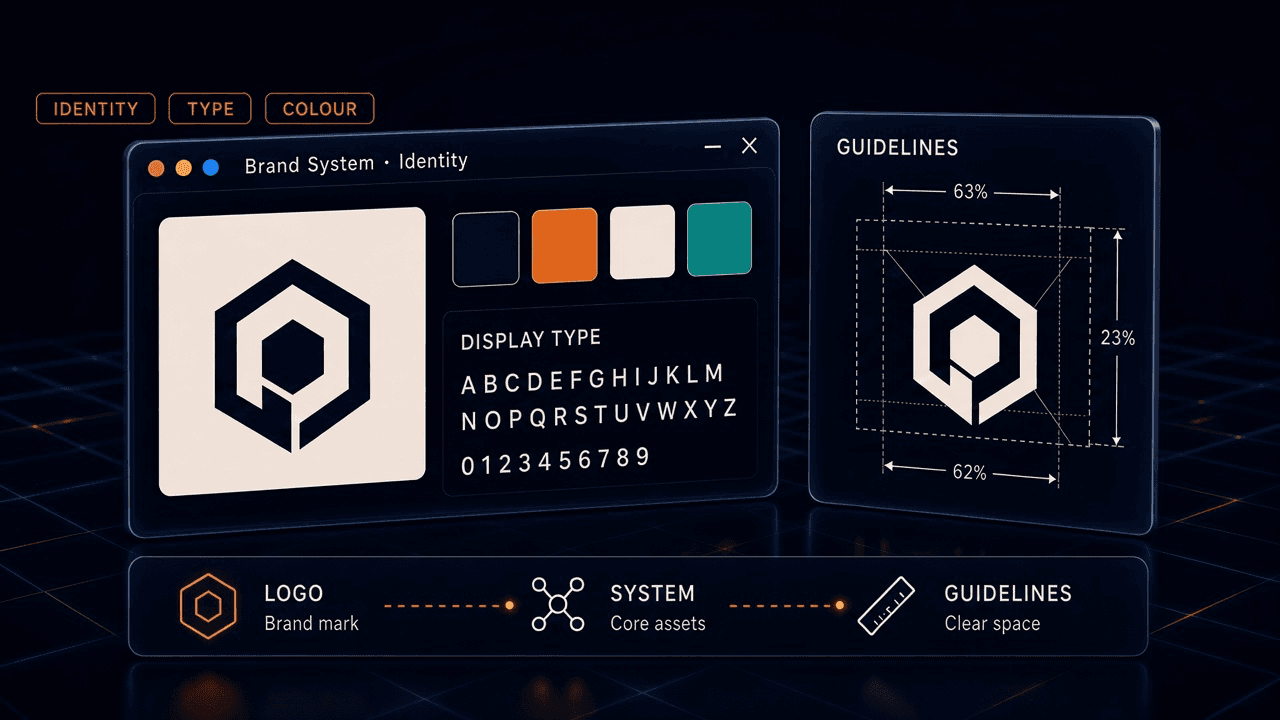
Most brand problems aren't a logo problem. A company can have a perfectly fine logo and still feel like nobody's home — inconsistent messaging across the website and the pitch deck, a colour palette that drifts slightly differently on every asset because there's no real system, a visual identity that hasn't caught up to what the company has actually become since the logo was designed three years and two pivots ago.
The cost is trust, quietly. A prospect comparing two vendors reads inconsistency as risk — if the brand can't hold itself together, what does that say about the delivery? A strong product undersold by a weak, inconsistent identity loses deals it should win on substance alone.
Most "rebrands" also make the opposite mistake: a striking new logo with no system underneath it, so six months later every new asset is a one-off decision again, and the brand has drifted right back to where it started.
Algotrax builds brand identity as a system — positioning and messaging first, then the visual language, then the guidelines that make it survive contact with every future designer, vendor, and intern who touches it.
What's included
Positioning and messaging work before a single visual gets drawn
Visual identity: logo, colour, type, and the system that holds them together
Design systems built to ship in code, not just live in a PDF brand guide
Marketing collateral — pitch decks, sales materials, signage where relevant
Brand guidelines your own team and future vendors can actually follow
How it actually runs
Positioning & messaging
What the company actually is, said plainly, before any visual work starts — the brief every future design decision gets measured against.
Visual identity
Logo, colour, and type explored and decided as one coherent system, not a logo first with the rest improvised around it later.
Design system build
Tokens and components built to ship in code — the same colours and type rules the product team implements, not a PDF that drifts from what's actually live.
Collateral & applications
The identity applied to the real things it needs to work on — pitch decks, signage, the product itself — to prove it holds up outside a mockup.
Guidelines handoff
Documentation clear enough that your own team, or the next agency, can extend the brand correctly without calling us for every decision.
Built with
What most agencies get wrong here
Designing a logo before deciding what the company actually says about itself.
A beautiful mark with no positioning underneath it is decoration, not a brand.
Handing over a PDF instead of a system.
Guidelines nobody can actually implement in code or campaign work drift out of use within a year.
Skipping how the brand needs to work in the product.
A brand designed only for marketing collateral often breaks down the moment it has to become a real UI — colour contrast, component states, dark and light contexts.
Treating brand as a one-time project instead of a system that gets extended.
The best brand identities are built expecting new applications, new team members, new vendors — not a closed, finished object.
How the engagement works
Branding engagements typically run as a fixed-scope project — positioning and messaging first, then the visual identity and system, with clear milestones and real options presented at each stage, not a single reveal at the end.
Ongoing collateral needs after the initial system ships — decks, campaign assets, new applications — usually move to Graphic Design & Creative, either project-based or on a retainer, using the system this engagement builds.
Every deliverable — files, guidelines, source assets — is handed over in full; there's no dependency on Algotrax to use your own brand.
Once the system ships, every future asset — a deck, a hire's first presentation, next year's campaign — starts from the same visual language instead of being reinvented from nothing.
Getting started is the positioning conversation — what the company actually is, in plain language, before any visual direction gets explored.
Tell us where branding & design fits in, and we'll reply within a day.
- A real person reads this, not a queue
- No discovery call required to get a straight answer
- Tell us to go away and we will — no drip sequence
Questions worth asking first
Yes — branding stands on its own. Most clients do end up running more than one discipline with us because the same team already understands the business, but a brand-only engagement is a real offering.