
Samarth Properties
“A trusted real-estate developer in Pune — premium plotting and farmhouse projects.”
A fast, image-led marketing site for a Pune plotting developer, with a custom pinned gallery, an animated project map and a dedicated flagship-project page.
- Sector
- Real Estate
- Engagement
- 2026
- Scope
- End to end
Overview
Samarth Properties needed a marketing site that carries a 13-project portfolio and a flagship launch, Shreya Valley, without feeling like a template. We built a Vite/React site with a rotating hero, an animated stats section, a cross-project gallery with load-more, a completed-projects grid, a testimonials marquee, and an interactive location map.
The flagship project gets its own page — hero, 16 amenities, a hover facility showcase, plot categories, gallery, FAQ and news teasers — and every other project renders through one reusable detail/gallery template.
The brief
A portfolio site that shouldn't look like one
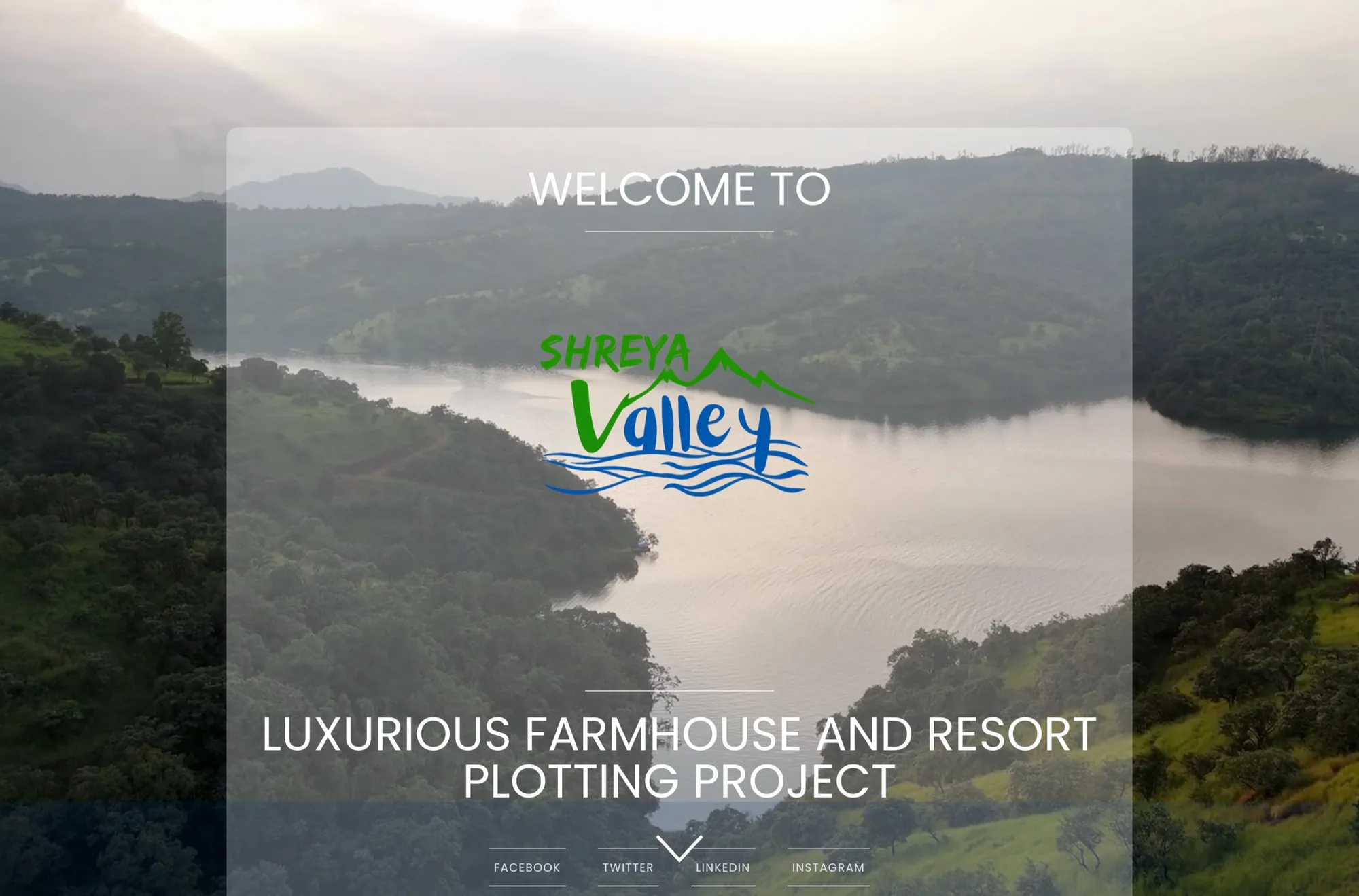
Samarth Properties is a plotting developer in Pune with a real body of work — thirteen projects, ten of them completed, and a flagship launch, Shreya Valley, a farmhouse and resort plotting project in the Sahyadri hills of Bhor.
The brief was a marketing site that carries all of that without feeling like a template. Real-estate sites tend to collapse into the same grid of cards and the same stock hero. This one had to feel like a place, and load fast enough that a buyer on a phone in a low-signal area actually sees it.
It's brand, web and content in one engagement: a Vite and React front end, no backend, built in 44 days and measured at just over ten thousand lines.
The build
A front end, made with some care
React 19 on Vite, React Router for the project pages, Framer Motion for the section reveals, and Embla for the hero carousel — which rotates on a six-second timer and takes manual controls. Type is Fraunces for the headings and Manrope for everything else, both variable fonts loaded locally so there's no font-swap flash. Tailwind v4, tokenised light and dark palettes.
The 191 project photographs are served from S3 rather than bundled, so the site itself stays small. The homepage runs an animated stats band, an about section, a new-launches section, a cross-project gallery that loads nine images at a time, a completed-projects grid, a testimonials marquee built from eight real committed reviews, and an interactive location map whose pins switch as you select an ongoing project.
The hard part
A gallery that pins to the scroll
On the flagship page, the project gallery runs horizontally. As you scroll down, the gallery pins in place and the images translate sideways — a single continuous move through the project's photography, not a carousel you have to click.
It measures its own width with a ResizeObserver, computes exactly how far it needs to translate, and drives the pin off scroll position. And it checks for reduced-motion first: a visitor who has asked their system to calm animations down gets a normal, plain scroll instead. The effect is optional; the content never is.
The effect is optional. The content never is.
The detail
Image groups that don't 404
Thirteen project folders, 191 images, and a client who will keep adding photos. So the gallery doesn't reference files by exact name. It maps each project to a named image group, and when a named file isn't there it falls back to the next indexed image in the folder.
Someone on the Samarth side can drop new photos into a project's S3 folder and the site picks them up — no rebuild, no broken image, no call to us.
The system
One flagship, one template for the rest
Shreya Valley gets a page of its own: the hero, sixteen amenities, a hover facility showcase, three plot categories, the pinned gallery, an FAQ, and news teasers — the full launch treatment for the project that's actually selling.
Every other project renders through a single reusable route — a lightweight detail, gallery and contact page keyed on the project id. Add a project to the data file and its page exists. It's the right amount of build: bespoke where it earns attention, templated where it doesn't.
The engineering you don't see in a demo.
A gallery that pins to the scroll
The horizontal gallery measures its own width with a ResizeObserver, computes the scroll distance, and pins + translates on desktop — unless the visitor prefers reduced motion, in which case it falls back to a normal scroll.
Image groups that don't 404
Gallery items map from named image groups and fall back to indexed images when a named file isn't found, so adding photos to a project folder never breaks the page.
What it runs on.
Measured from the repository, not the pitch.
Samarth Properties, definitely the name of trust. If you are looking for investment in a plot around Pune, then Samarth Properties should be the first name to consider.
Shekhar Raut · Customer
Committed in the client's repository
Against the baseline.
Reported as change against the engagement baseline. Search figures stay as percentages and multiples on purpose — absolute volume tracks Samarth Properties's news and category cycle, so the relative move is the honest measure.
Scope, stack, scale and the engineering above are drawn straight from Samarth Properties's codebase and git history.
The takeaway
Fast, image-led, and not a template
Forty-four days, one team, brand through to build. A thirteen-project portfolio and a flagship launch on a front end small enough to load quickly on a rural phone signal, with one genuinely nice piece of scroll craft on the page that matters most.
The traffic and enquiry numbers are Samarth's. What we can show is a real-estate site that reads as a place, not a spreadsheet of plots.