
Take It Easy
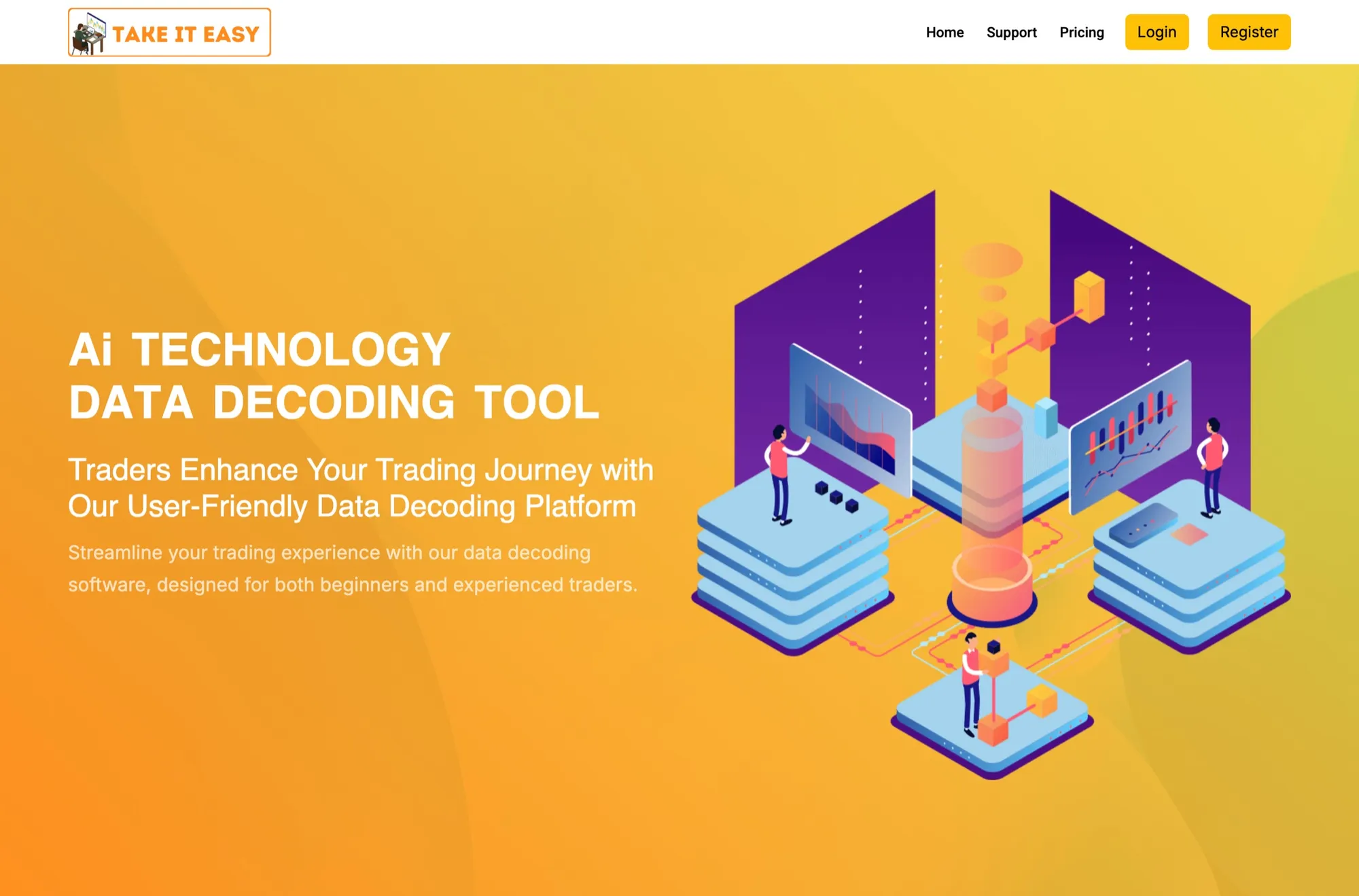
“Enhance your trading journey with a user-friendly data decoding platform.”
A trading-analytics platform for Indian retail traders — marketing site, web terminal, mobile app and API, built and maintained end to end.
- Sector
- Trading / Fintech
- Engagement
- 2024 – 2026
- Scope
- End to end
- Live
- takeiteasy.co.in
Overview
Take It Easy is a full trading-analytics product: a public marketing site, an authenticated web terminal with 50+ analysis screens, an Ionic mobile app on both stores' toolchains, and a Flask API that fronts market data, payments and an AI assistant.
It is a long-running engagement — the web codebase has been under active development since 2024 — covering options and futures dashboards, OI and option-chain analysis, proprietary 'Chanakya' and 'Data Decoding' tools, paper trading, an institute/admin console, Razorpay and Apple in-app purchase billing, and a Perplexity-backed finance chat.
The brief
A trading-analytics product, built and kept running
Take It Easy positions itself as a data-decoding platform for Indian retail traders — a place to make sense of open interest, participant flows and option-chain behaviour without a Bloomberg terminal. Delivering that meant four moving parts, not one: a public marketing site, an authenticated web terminal with more than fifty analysis screens, a mobile app on both stores' toolchains, and a Flask API that fronts market data, payments and an AI assistant.
This is a long-running engagement. The web codebase has been under continuous development since 2024, through options and futures dashboards, OI and option-chain analysis, the proprietary Chanakya and Data Decoding tools, paper trading, an institute and admin console, Razorpay and Apple in-app-purchase billing, and a Perplexity-backed finance chat.
Algotrax carries all of it — the Angular web app, the Ionic mobile app with its native Swift plugin, the Flask API, and the deploy — as one team on one roadmap.
Architecture
Three apps, one API
The web terminal is Angular 15 with Material, Nebular and PrimeNG; the mobile app is Ionic Angular 19 on Capacitor 7 with native Swift for the StoreKit plugin; the backend is a Flask-RESTX API over MongoDB, served by Gunicorn with gevent workers and documented with Swagger.
Nineteen MongoDB collections hold users, packages, coupons, subscriptions, transactions, Apple IAP records, strategies and screener data. Every push to the backend runs Pylint in CI. One feature — the futures section — landed as a single 647-file commit; the codebase is large because the product is.
Data decoding
Turning a raw feed into a read on the market
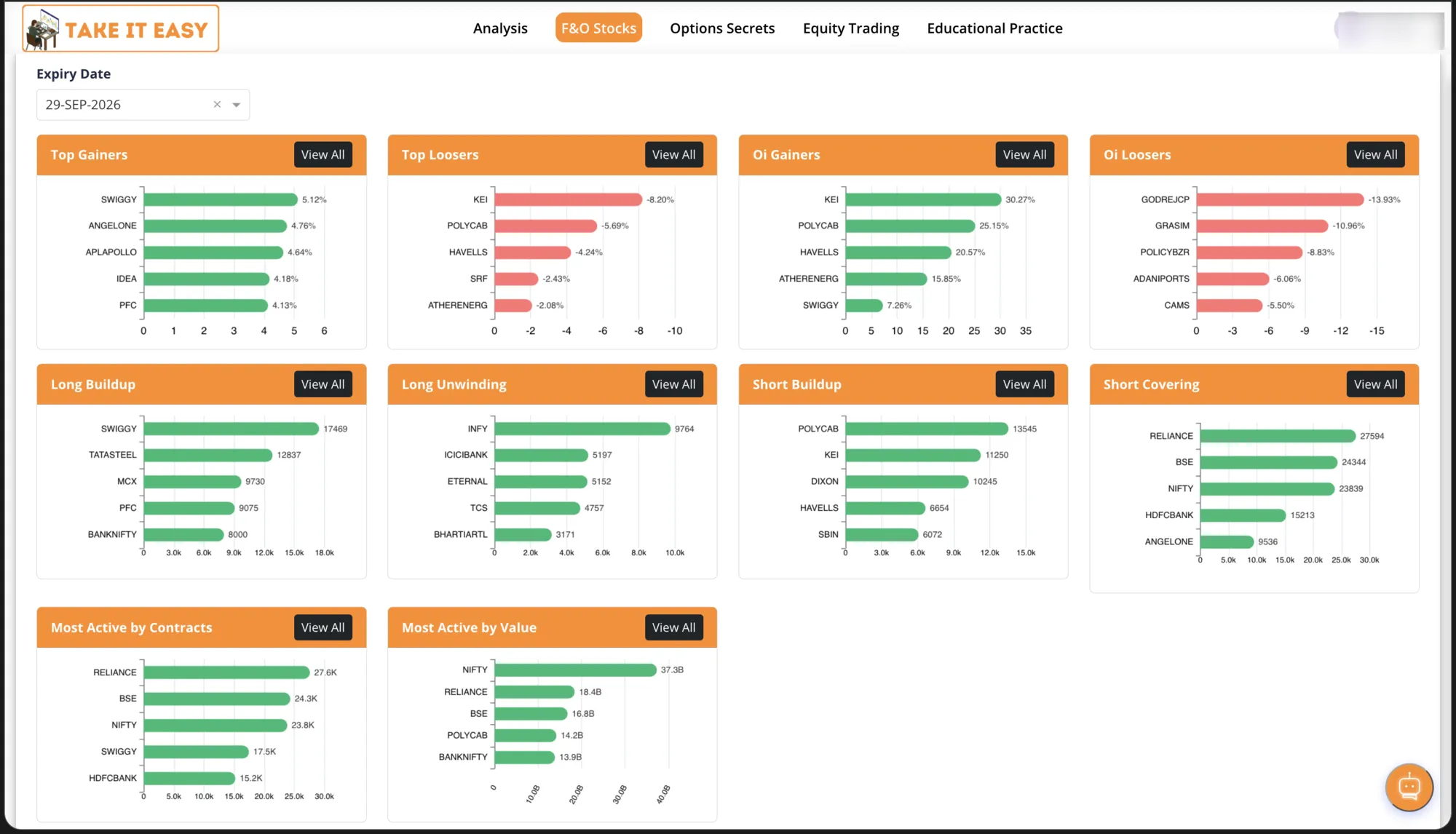
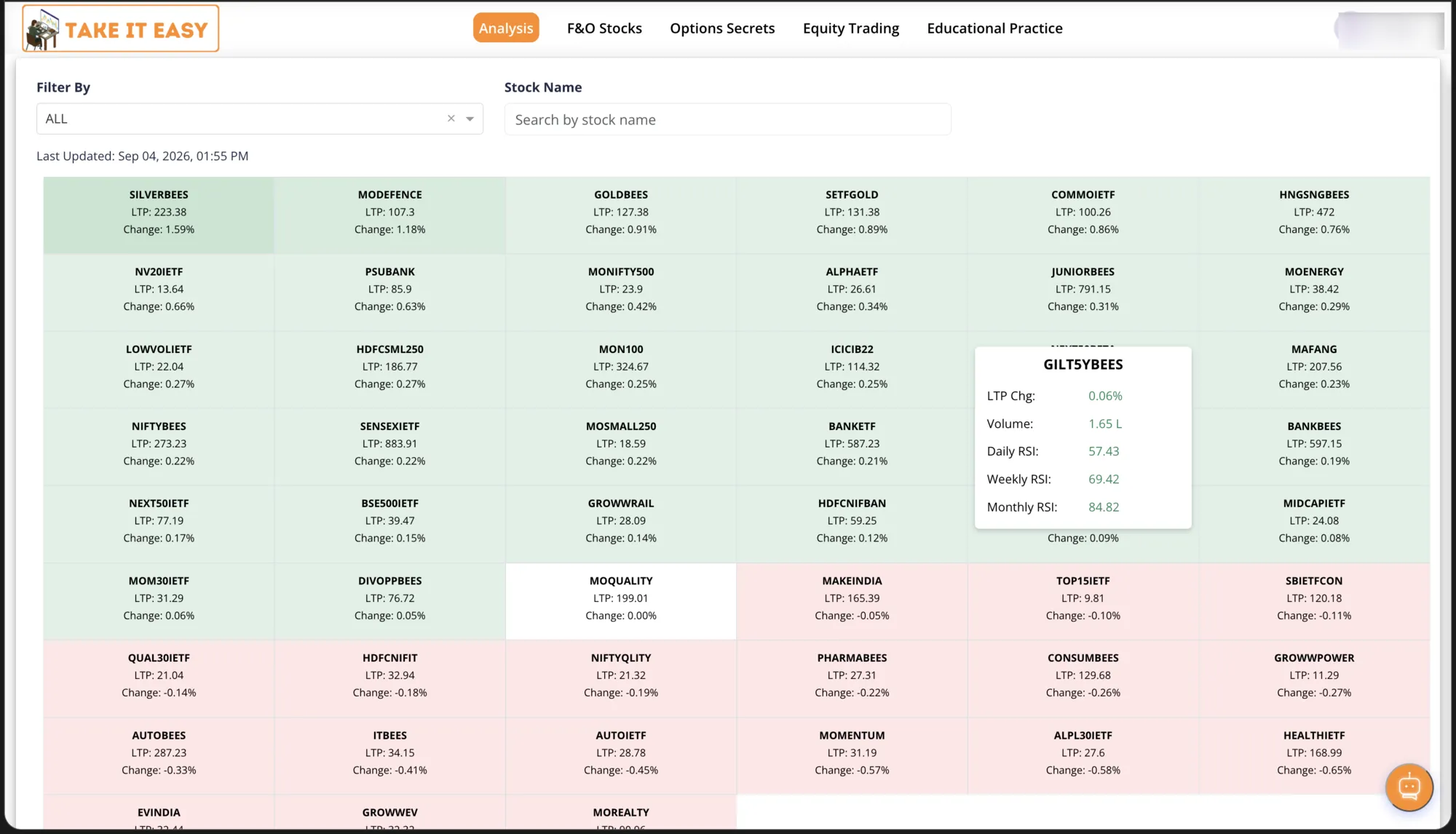
The futures and options dashboards don't just list data — they classify it. Contracts are bucketed into top gainers and losers, OI gainers and losers, long buildup, long unwinding, short buildup, short covering, IV rise and fall, most active by contracts and by value. The frontend normalises whatever shape the provider returns and sorts each bucket for display, so a format change upstream doesn't blank a screen.
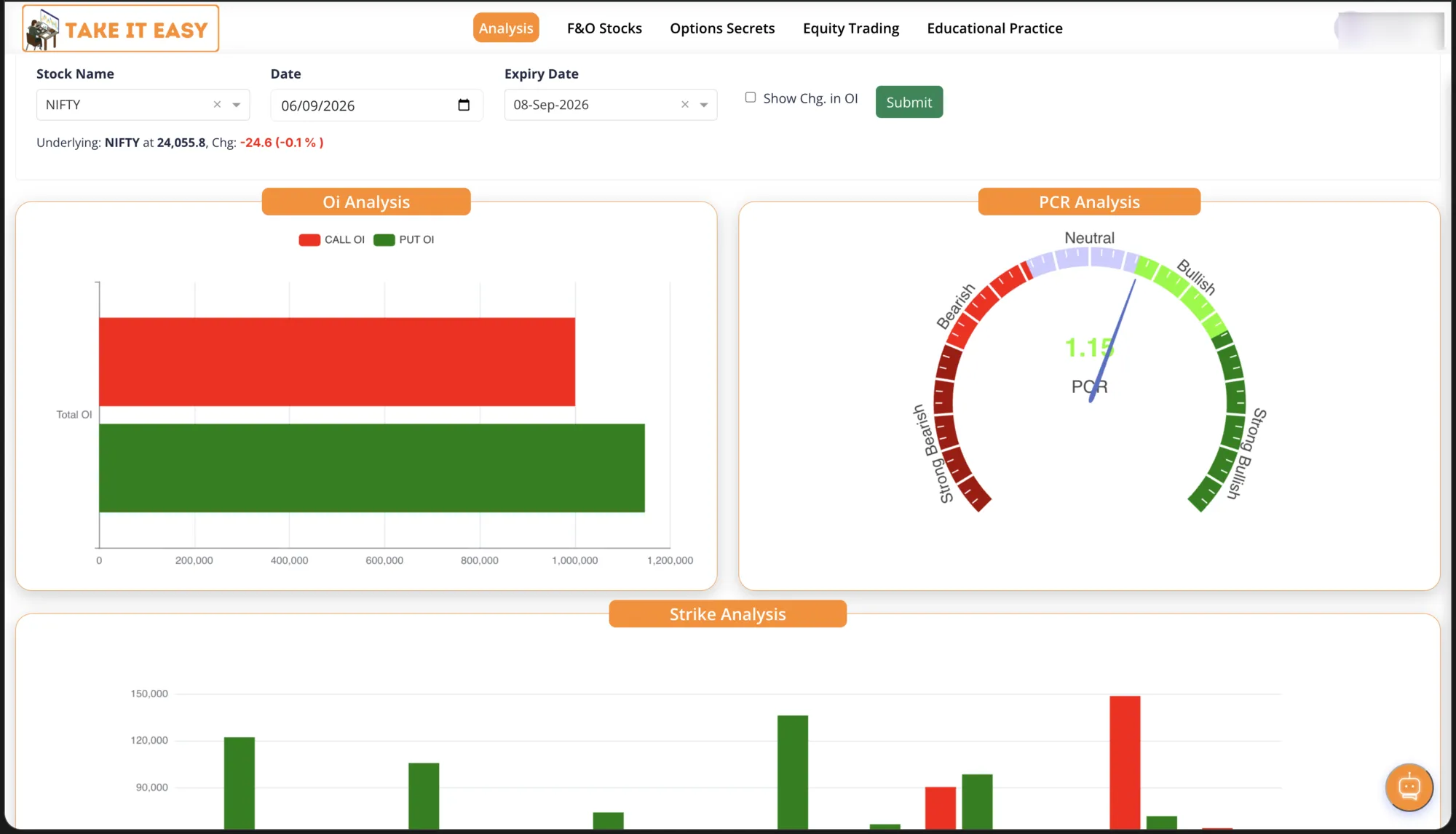
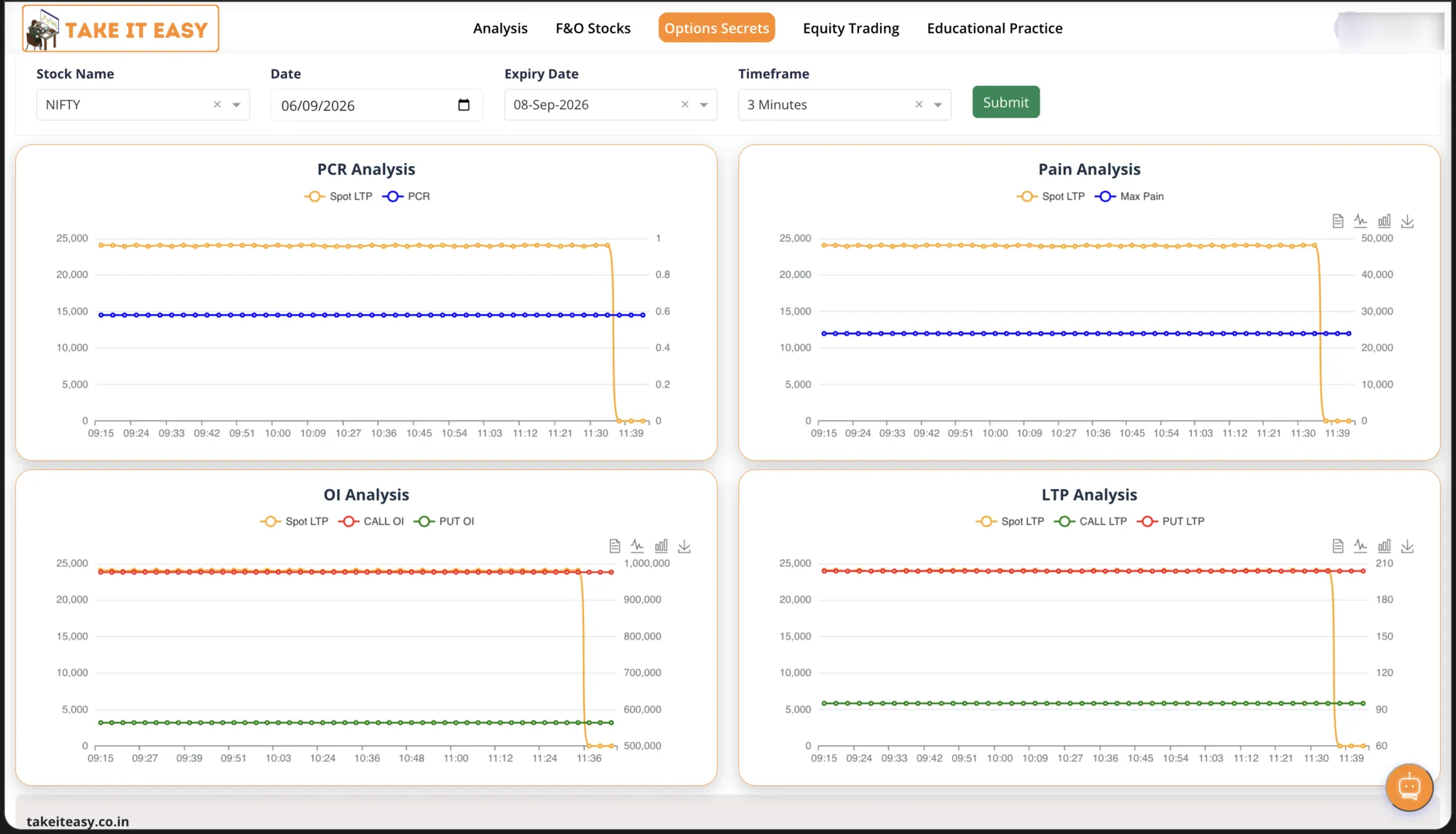
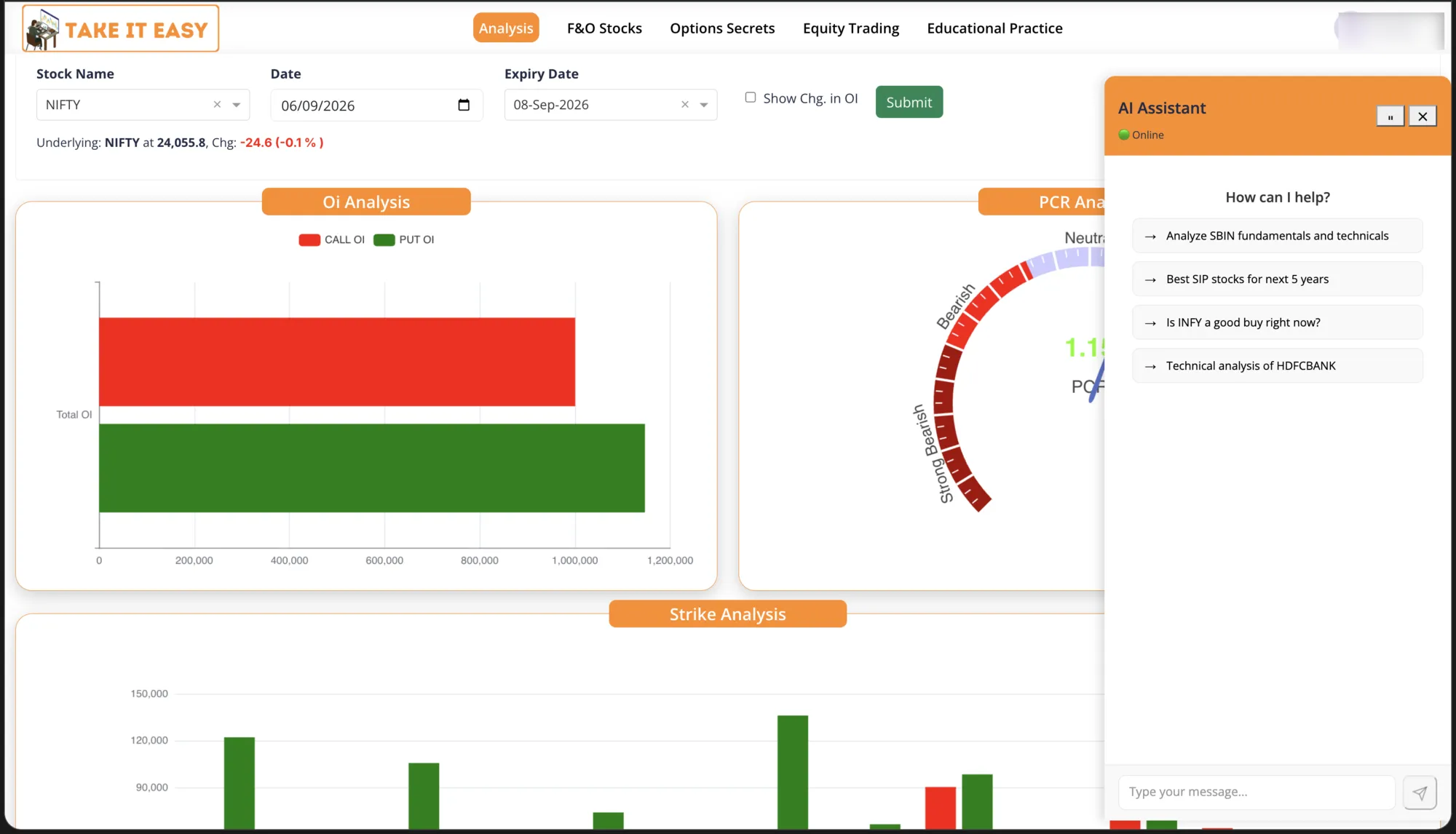
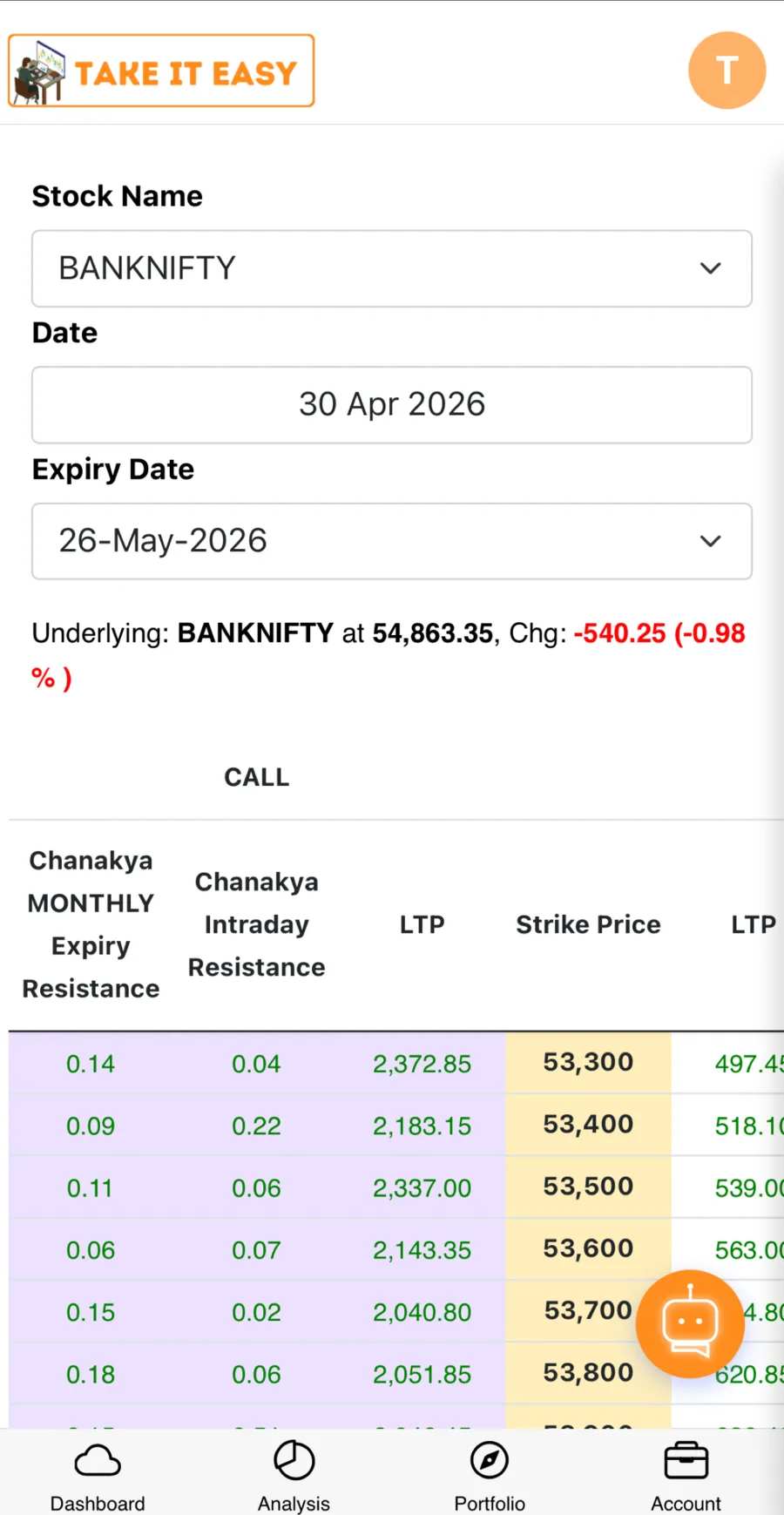
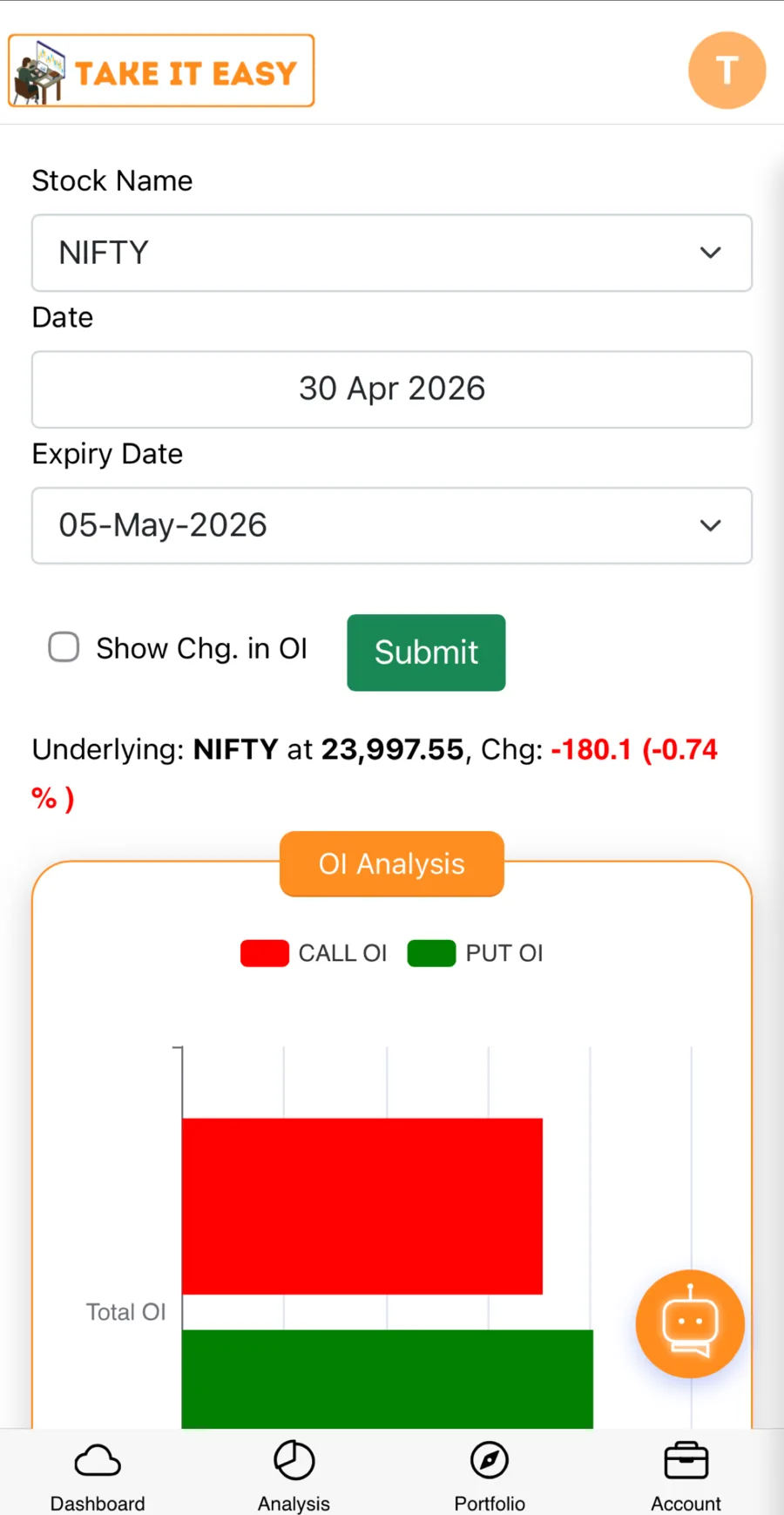
On top of that sit the named tools: OI analysis with a PCR sentiment gauge, max-pain and pain analysis, a live option chain and an option-chain stream, OI stats, OI charts and an OI mixer, and the Chanakya resistance model. Options Secrets tracks PCR, max pain, OI and LTP through the whole session so a trader can see how the picture moved, not just where it landed.
The dashboards don't just list the data — they classify it, and the classification survives an upstream format change.
Access control
A market-data proxy that carries identity
Every market-data request the apps make is forwarded to an external provider through the Flask API, not sent direct. The proxy attaches a service API key and an end-user header, applies a timeout and retry, and runs a subscription and pro-tier check before the call goes out.
The result: the data vendor never sees an end user, entitlement is enforced server-side on every request rather than trusted from the client, and swapping the provider — which happened mid-engagement — is a backend change, not an app release.
Billing
One entitlement model, two app stores
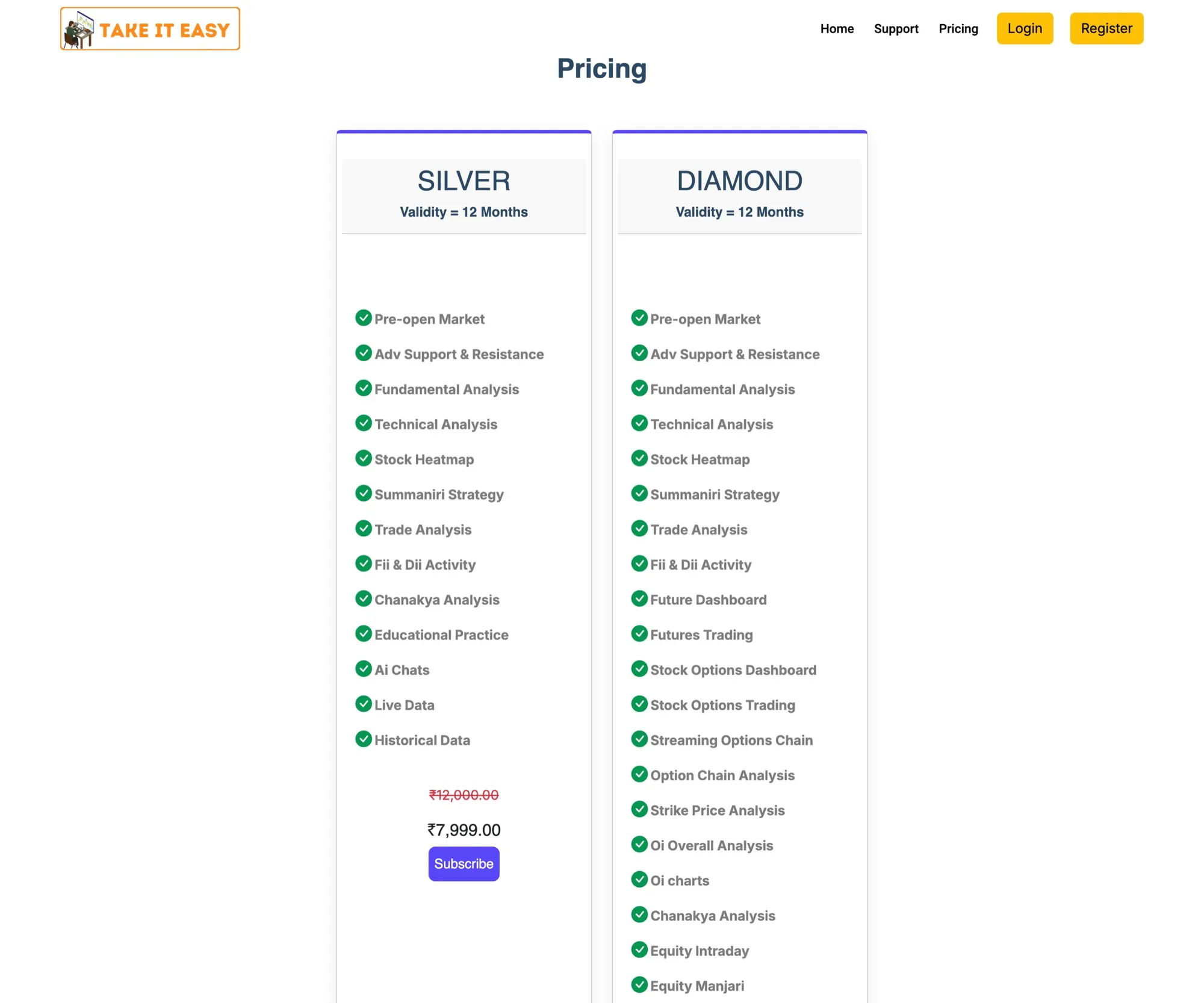
A subscriber can pay with Razorpay on the web or with Apple in-app purchase in the iOS app, and the platform has to reconcile both into a single answer: how many days are left, and is this account subscribed right now.
Razorpay fulfilment creates INR orders in paise, stores the transaction, captures and re-fetches the payment, updates the package entitlement and verifies the webhook signature. Apple IAP maps product IDs to package records, verifies transactions and server notifications, stores the raw Apple payload, detects cross-account ownership conflicts on restore, and revokes live sessions when an Apple subscription lapses. The StoreKit bridge is a custom Swift Capacitor plugin.
Two payment rails, one 'days left / is subscribed' answer — including revoking a live session the moment an Apple subscription lapses.
The assistant
A finance analyst on tap
An AI assistant sits beside the analysis screens. It streams responses from Perplexity's sonar model over Server-Sent Events with a finance-analyst system prompt, so a trader can ask for a fundamentals-and-technicals read on a stock, or a view on the current option-chain, without leaving the workflow.
The plumbing is deliberately simple — SSE, not a bespoke socket protocol — which keeps it debuggable and cheap to run alongside everything else the API is doing.
The mobile app
The terminal, mirrored to a phone
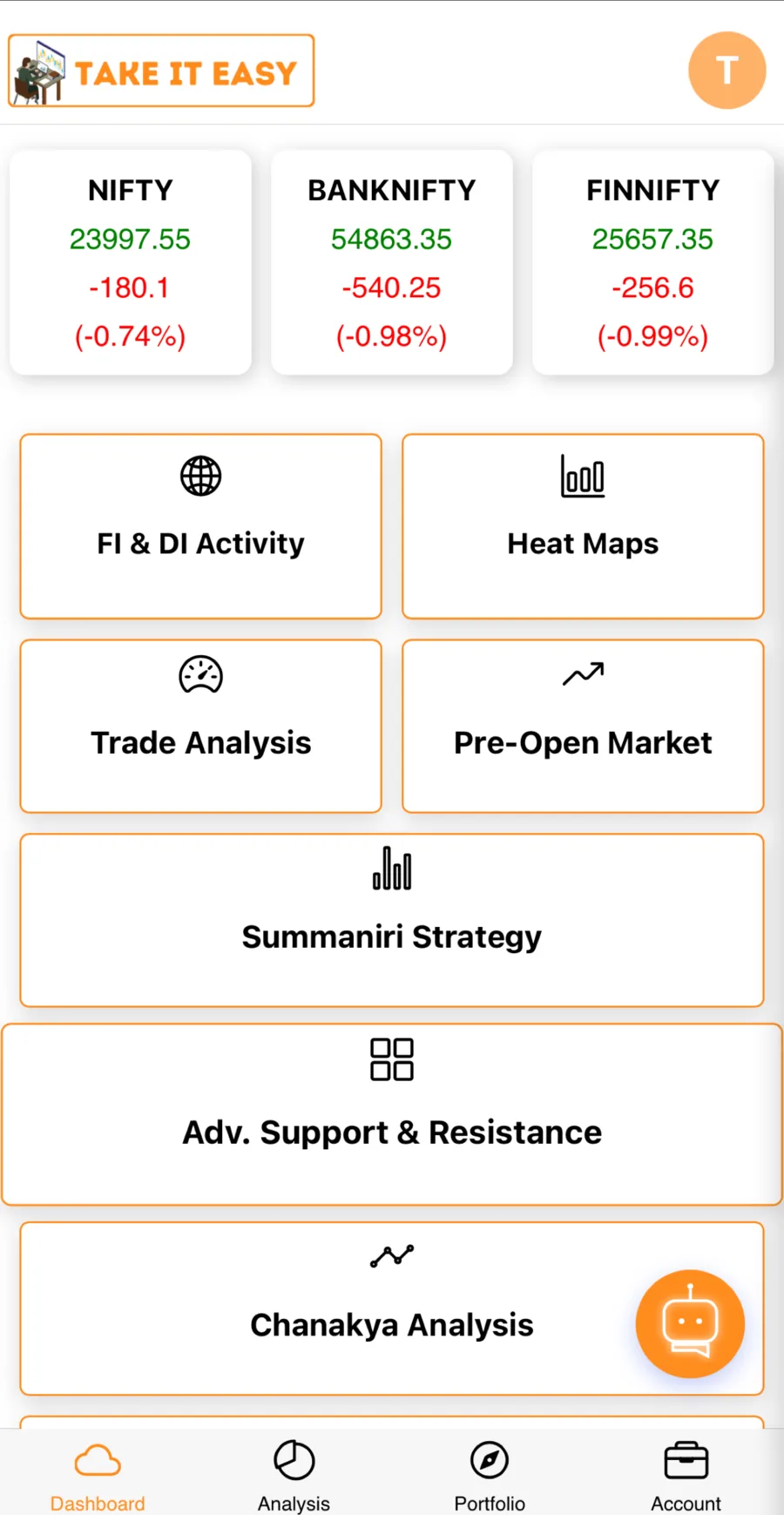
The Ionic + Capacitor app carries the same analysis, trading and account surfaces as the web terminal — index cards, FII/DII activity, heatmaps, Chanakya analysis, advanced support and resistance, pre-open market, the Summaniri strategy — with native biometric unlock, FCM push notifications, and Apple StoreKit purchases through the custom Swift plugin.
Paper trading works without a second signup: per-user practice credentials are derived deterministically from the username and a shared secret, auto-registered on the first miss, token-cached, and retried on an auth failure. A user opens the simulator and it's simply there.
The engineering you don't see in a demo.
One entitlement model, two app stores
Subscription state has to reconcile Razorpay orders and Apple IAP transactions into a single 'days left / is subscribed' answer, including revoking sessions when an Apple subscription lapses and detecting cross-account ownership conflicts on restore.
A market-data proxy that carries identity
Every market-data request is forwarded to an external provider with a service key plus an end-user header, timeout and retry, and a subscription/pro check — so the data vendor never sees end users and access control stays server-side.
Deterministic paper-trading credentials
Paper-trade accounts are derived deterministically from username + a shared secret, auto-registered on first miss, token-cached, and retried on auth failure — so a user gets a working simulator without a separate signup.
What it runs on.
Measured from the repository, not the pitch.
I've been using Takeiteasy for options trading, and the interface is very easy to use. Whether I'm on my desktop or mobile, placing trades is seamless. The design is clean and attractive, which makes it perfect for both beginners and experienced traders.
S. P. Ravichandran · Trader
Committed in the client's repository
Who we worked with.
Saurabh Maurya
CEO & Founder, Take It Easy
Against the baseline.
Reported as change against the engagement baseline. Search figures stay as percentages and multiples on purpose — absolute volume tracks Take It Easy's news and category cycle, so the relative move is the honest measure.
Scope, stack, scale and the engineering above are drawn straight from Take It Easy's codebase and git history.
The takeaway
What a multi-year engagement looks like
Take It Easy isn't a build-and-hand-off. The web codebase is two years deep, the API has been through a server migration and a data-provider swap without an app release, and Pylint runs on every backend push. Three applications, one team, one roadmap.
The traffic and subscription numbers are the client's to share. What we can show is a product that has been shipping continuously for two years and still is.