Shopify & E-commerce Development
Custom Shopify builds and storefront engineering for D2C and retail brands that have outgrown a stock theme.
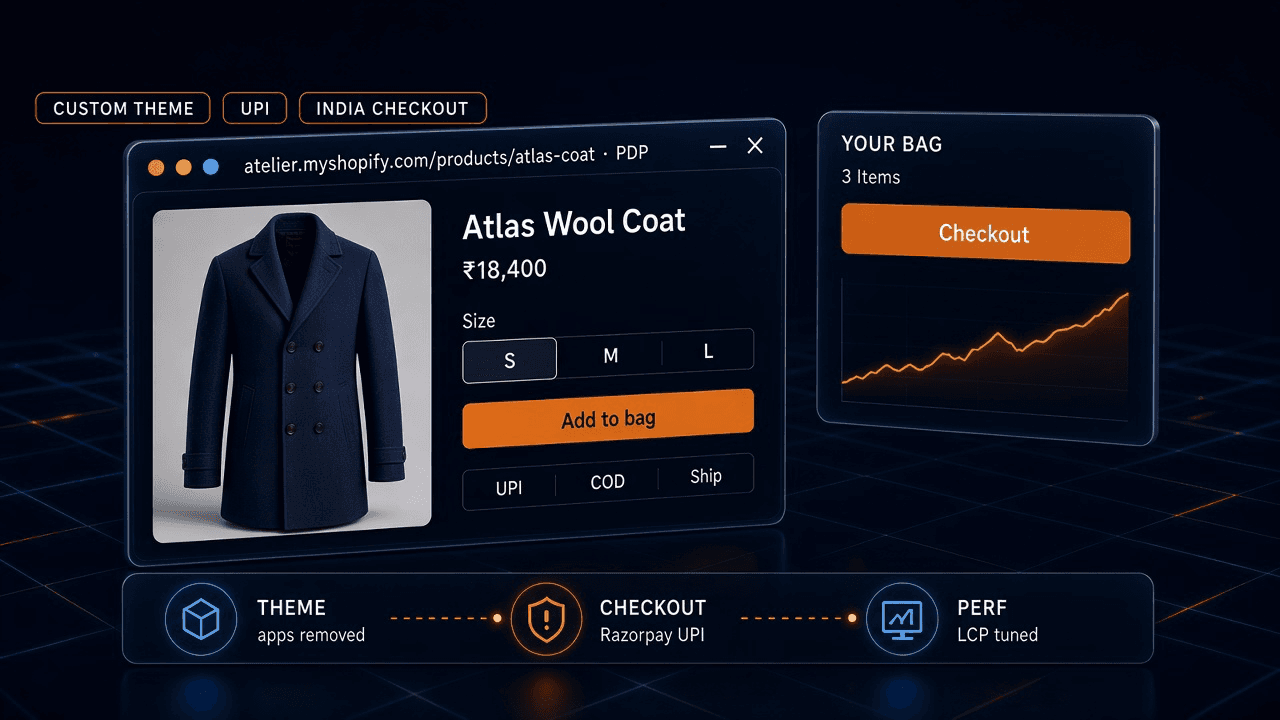
Most Shopify stores don't underperform because Shopify is limited — they underperform because the store is a stack of decisions nobody made on purpose. A theme picked because it looked fine in the preview, then fifteen apps bolted on to patch what the theme couldn't do, each one adding its own script tag to a homepage that now takes six seconds to paint.
The result is a storefront that looks like every other store running the same theme, converts worse than it should because checkout friction and page speed are both quietly leaking sales, and can't be changed without someone digging through Liquid templates nobody documented.
For brands doing real volume, the cost compounds: every point of conversion rate is real revenue, and a slow, generic storefront is invisible tax on every campaign driving traffic to it.
Algotrax builds Shopify stores as a real engineering project — a theme built for this brand specifically, an app stack chosen deliberately instead of accumulated, and checkout logic tuned for how Indian payment methods and shipping actually work.
What's included
Custom Shopify theme development (not a modified stock template)
Shopify Plus and headless storefront builds where scale demands it
Checkout, payments, and shipping logic tailored to the Indian market
App and integration audits — most stores run 15+ apps slowing every page down
Migration from other platforms with SEO and order-history preserved
How it actually runs
Store & app audit
Before any rebuild, a full audit of the existing theme, app stack, and page-speed profile — so the plan targets what's actually broken, not a guess.
Theme architecture
A custom theme (or headless storefront where Shopify Plus scale demands it) built around this brand's actual merchandising and content needs, not a modified template.
Checkout & payments
Payment methods, shipping logic, and tax rules configured for how Indian D2C actually transacts — COD, UPI, regional shipping zones — not a default US-centric setup.
App consolidation
Every app on the store earns its place or gets cut; each one is a script tag slowing the page down, and most stores are running far more than they need.
Launch & speed validation
Core Web Vitals checked against real device conditions before go-live, not just a desktop preview.
Post-launch iteration
Conversion data from real traffic drives what gets built next, not a redesign every eighteen months on a hunch.
Built with
What most agencies get wrong here
Picking a theme for the demo, not the catalog.
A theme that looks great with the stock demo products often breaks down under a real catalog's actual size, variants, and edge cases.
Installing an app for every feature request.
Each app is a JavaScript file loading on every page view, whether or not that feature matters to most visitors — bloat happens one "quick fix" at a time.
Ignoring mobile as a second-class experience.
Most Indian D2C traffic is mobile-first; a store designed on desktop and "made responsive" after the fact loses conversions nobody's counting correctly.
Treating checkout as fixed.
Shopify's checkout has real configuration room — shipping logic, payment methods, trust signals — that most stores never touch because nobody told them it was possible.
How the engagement works
Most Shopify engagements start with the audit — a week or so reviewing the existing store's theme, apps, and speed profile, so the scope reflects what's actually wrong rather than an assumption.
From there, a new theme build or a targeted fix-and-optimise pass runs as a fixed-scope project with clear milestones — you'll see the new theme in a staging environment well before it goes live, not just a final reveal.
Ongoing storefront work (seasonal campaigns, new collections, continued speed tuning) typically moves to Maintenance & Support once the initial build ships, so there's one team and one context the whole way through, not a handoff to someone new.
Once the new theme and app stack are live, page speed and checkout friction stop being a background tax on every campaign — the store converts the traffic it's already paying to attract, instead of leaking a share of it before checkout.
Getting started is the audit — send over store access, and you'll have a clear, prioritised list of what's actually costing conversions before committing to a rebuild.
Tell us where shopify & e-commerce development fits in, and we'll reply within a day.
- A real person reads this, not a queue
- No discovery call required to get a straight answer
- Tell us to go away and we will — no drip sequence
Questions worth asking first
Both. A large share of Shopify work is an app-and-theme audit on an existing store — most site speed problems on Shopify come from app bloat, not Shopify itself.